
How to Pack a Suitcase Without Creases
Whether on a business trip or a beach holiday, the right clothing is essential for every journey. After carefully selecting and packing your clothes, you’re ready to go. Upon arrival at your destination, you unsuspectingly open your suitcase and find the familiar problem: everything is creased. Creases mar the clothes you had previously folded with great care and effort. We all know this scenario all too well. To help you avoid this problem in the future, we offer tips on folding various types of clothing.
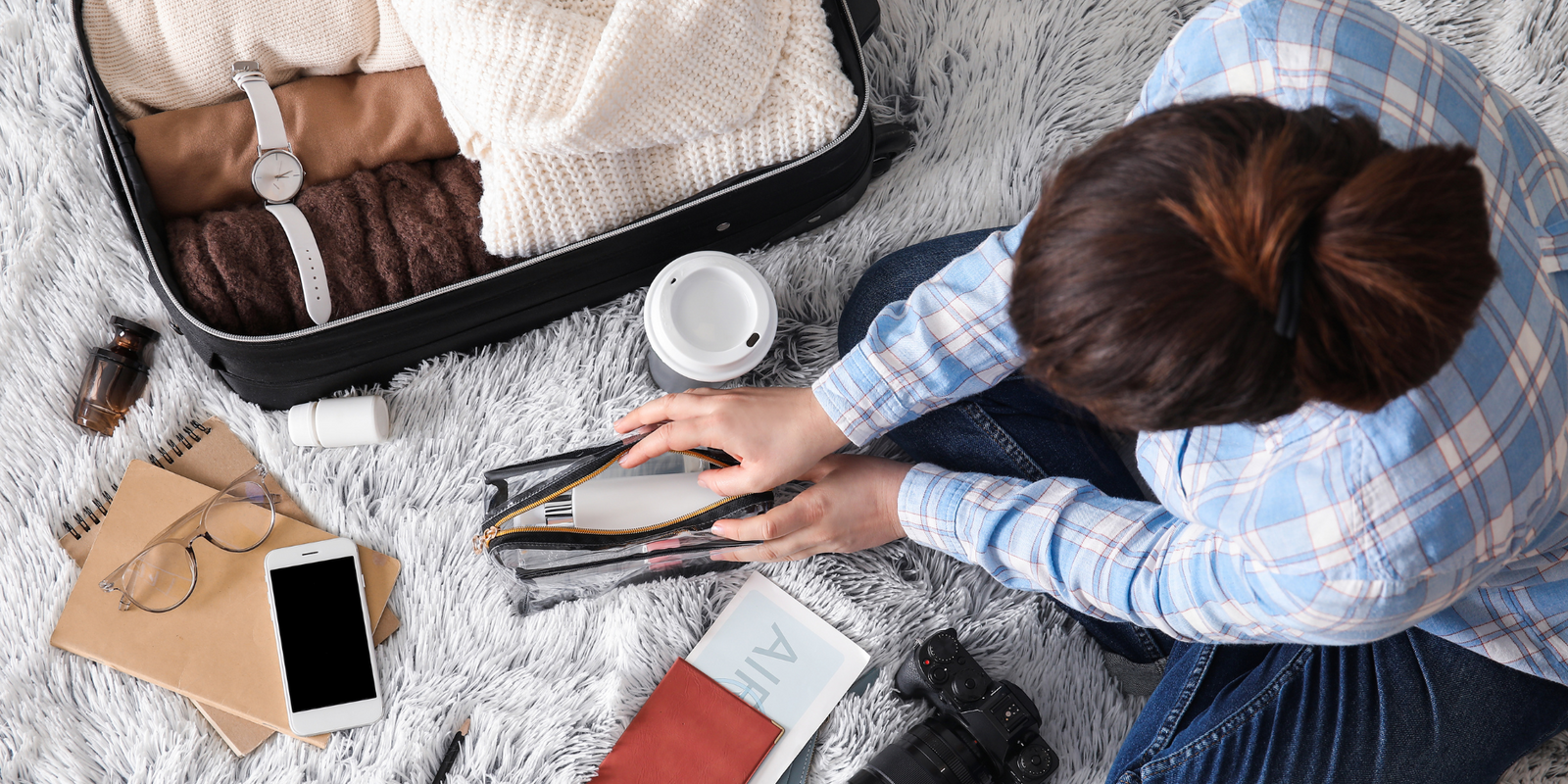
The folding technique
You have the option to fold your clothing in various ways. We present the most effective methods to ensure your clothing survives the trip crease-free.
Traditional folding
Traditional folding is the classic and most popular variant, which we find most often in our wardrobes. We explain in brief steps how to fold your clothing correctly using this method.

For tops, proceed as follows:
- Spread the top out in front of you.
- Fold it inwards from the right and left towards the middle.
- Fold the sleeves along the shoulders or downwards, depending on their length.
- Then fold it once more in the middle to get a neat square or rectangle.
Fold pants and skirts as follows:
- Spread the pants or skirt out in front of you.
- Place one leg over the other or fold the skirt lengthwise in the middle.
- Fold the pants or skirt two to three times until they have a compact size.
There are more organized and space-saving variants, but this method is especially suitable for delicate materials, which you often find in business clothing such as suits, shirts, blouses, and the like, due to the simple folding. Additionally, the first steps of this method are also found in the other variants. Only the last step differs among all three methods.
Rolling
Experienced backpackers have known this trick for years: roll clothes instead of folding. This not only helps keep the suitcase organized so you can see individual garments faster, but this method also saves a lot of space.

Roll tops as follows:
- Spread the top out in front of you.
- Fold it inwards from the right and left towards the middle.
- Fold the sleeves along the shoulders or downwards, depending on their length.
- Roll the rectangle from top to bottom.
Follow these steps for pants and skirts:
- Spread the pants or skirt out in front of you.
- Place one leg over the other or fold the skirt lengthwise in the middle.
- Roll the pants or skirt from the waistband.
To keep clothing crease-free, it is crucial to strictly remove creases from the material while rolling by smoothing or pulling the material taut repeatedly and rolling tightly. Before rolling, place the garments in the corresponding starting shape, which is a rectangle, creating several layers. Make sure all layers lie flat and you smooth out the creases. This way, your clothing will surely survive the trip crease-free.
Packets according to Marie Kondo
An alternative to rolling is the packet method according to Marie Kondo, which has been known among organisation professionals for several years. If you belong to this group, you can simply pack the packets from the closet or dresser into the suitcase. If you are not yet familiar with the method, we explain it to you here.

For tops, proceed as follows:
- Spread the top out in front of you.
- Fold the right and left sides towards the middle.
- Fold the sleeves along the shoulder or downwards depending on length. Unlike the other method, here you make sure to fold the clothing as narrowly as possible to get a thin rectangle.
- Now fold up or down the bottom and top sides so that a small square is formed.
- You continue this until both squares meet in the middle and you lay them on top of each other.
- You can now place the so-called bundles upright (with the open, folded side down) next to each other in your suitcase.
Fold pants and skirts as follows:
- Spread the pants or skirt out in front of you.
- Place one leg over the other. Fold skirts once in the middle depending on length or, for wide models, fold the two outer sides (as in step 2 for tops) once towards the middle.
- Now fold up or down the bottom and top sides.
- You continue this until the two folded-over surfaces meet in the middle and you lay them on top of each other. Because the cut differs significantly from, for example, tops, it can well be that the shape at the end resembles not a square but rather a rectangle.
This variant is even more organized than rolling, as you can stand more garments side by side and keep an overview.
Depending on the occasion of the trip and accordingly the clothing to be packed, different folding methods are suitable for the various garments so that they survive transport in your suitcase without creases.
Business trip or beach holiday? The occasion is decisive
Depending on the occasion, the selection of clothing suitable for the trip also varies. For a business trip, you will need the appropriate wardrobe, which in most cases consists of suits, shirts or blouses, and the like. Especially these garments are often made of delicate or comparatively stiff materials that require careful folding to arrive crease-free. For a beach holiday, on the other hand, summer everyday clothing suitable for the local climate is sufficient, which you can roll crease-free and, above all, very space-savingly or fold into bundles.
We give you some tips on the different garments you can transport crease-free with the right techniques depending on the occasion of your trip.

Business Trip: the different garments
Due to the often stiff fabrics of business clothing, the traditional folding technique is best suited in this case. This preserves the natural shape of the material.
Trousers and Skirts
To fold trousers and skirts, proceed as follows:
- Fold long fabric trousers first along the crease, and fold jeans simply in half. You do not need to fold a skirt.
- Now place the trousers in your suitcase so that they lie crosswise and the trouser legs stick out of the suitcase. The same applies here for long skirts.
- After placing the other garments on the trousers and skirts, you can lay the trouser legs or skirt ends over them so they wrap around.
Suit Jackets and Blazers
Garments like suit jackets and blazers pose a greater challenge due to their shape. With these simple steps, they will also remain crease-free.
- Place the suit jacket or blazer buttoned up with the front side facing down.
- For particularly delicate fabrics, we recommend turning the suit jacket or blazer inside out beforehand to protect the outer material. Make sure to push the shoulder area outward to avoid possible creases there.
- Now fold both sleeves along the shoulder area.
- Then fold it along the center line.
- If possible, do not place the suit jacket or blazer too far under other garments to avoid pressure marks.
Shirts and Blouses
For shirts and blouses, proceed similarly to how you would with a suit jacket or blazer.
- Spread the buttoned shirt or blouse out with the button placket facing down.
- Fold one sleeve and the side part of the garment towards the center, leaving about 5 cm next to the collar.
- Then fold the sleeve back down onto the folded surface and repeat on the other side.
- Finally, fold the narrow rectangle crosswise in the middle downwards.
If you have several shirts and/or blouses, we recommend folding them in pairs. Place both front sides together, but keep the collars facing opposite directions. This way, they won’t get flattened either.
Beach holiday: the different garments
For everyday clothing, you can use clear and space-saving methods like rolling or bundling. The starting shape of a rectangle is crucial for both variants. Here we explain how to properly fold tops and bottoms.
Tops
Everyday clothing can be perfectly rolled or folded into bundles. This way, your clothes arrive crease-free and you also save valuable space inside the suitcase.
Rolling
- First fold one side of the top with the sleeve forward towards the middle.
- Depending on the sleeve length, fold it back along the shoulder or downwards.
- Repeat these steps on the other side to get a narrow rectangle.
- Very wide outerwear is best folded twice vertically in the middle and then fold in the sleeves to achieve the desired narrow rectangle.
- Since folding creates multiple layers, it is especially important with each new layer to smooth out the surfaces and avoid creating new creases.
- Then roll the rectangle from the top to the bottom.
Folding into a bundle
- Only the last step differs from the rolling method. Therefore, first proceed as described in steps 1 to 5 above.
- Fold the resulting rectangle at the top and bottom so that a small square is formed on each side.
- Repeat this procedure two to three times until both sides meet.
- Now place the top side on the bottom and then you can stand the bundle upright.
Bottoms
Bottoms can also be easily rolled or folded into a bundle using the same principle as tops. Only the first steps differ due to the different shapes.
For trousers , proceed as follows:
Rolling trousers
- Spread out the trousers and lay the trouser legs on top of each other.
- Jeans are not very prone to creases due to the sturdy material, so you do not need to smooth this material as thoroughly. Fabric pants, on the other hand, do not forgive this so quickly, so in this case, you should carefully smooth out the creases.
- Compared to the width of the pant legs, a small area now protrudes at the top. Fold this protruding part of the pants in so that it is the same width along the entire length.
- Finally, roll up the narrow rectangle starting from the waistband to get the finished pants roll.
Fold pants packages
- Proceed as in the steps 1 – 3 mentioned above.
- Fold the pants lengthwise in the middle.
- Then fold the pants from both sides two to three times depending on the length.
Skirts require only a few simple steps to roll or fold them into packages due to their shape.
Rolling skirts
- Lay the skirt flat.
- For a bell skirt, first fold one side and then the other over the middle so that you get an almost triangular shape. For a straight skirt, fold it vertically in the middle only once or twice depending on the width.
- Then roll the skirt up from the waistband.
Fold skirt packages
- Follow the first two steps as described above.
- Fold the opposite sides, as with the pants, two to three times in equal steps towards each other.
Since it is not possible to fold a bell skirt back into the original rectangular shape due to its cut, the rolling method is more suitable in this case. You are free to combine both methods depending on the garment and cut, for example, placing rolled skirts next to stacked pants packages. Just make sure that the rolls and packages sit firmly in a row so that the folded garments keep their shape.
The decisive factor: the right suitcase size
The effort and neat folding do not help much if the size of the suitcase does not match the contents. The challenge is that the suitcase must be neither too large nor too small. In a suitcase that is too large, the contents lie loosely inside and have too much free space, so especially the folded clothes have no support, shift inside the suitcase, and lose their shape. A suitcase with too little space, on the other hand, presses the contents so tightly together that you cannot avoid pressure creases.
When in doubt, choose a slightly larger suitcase and place bulky items more generously. This uses more space, gives the clothes more support inside the suitcase, and allows you to pack shoes more space-efficiently for the return trip, creating room for souvenirs.
  
|
More tips
In addition to folding techniques, we give you further tips for very delicate materials or for the case when something does arrive creased.
Fill gaps: Make sure to fill all gaps in your suitcase so that the contents stay in place during transport and do not shift inside when standing upright. Use small fillers such as socks, underwear, or undershirts for this purpose.
Delicate material: Packing very delicate and crease-prone materials is a big challenge. You can place tissue paper or alternatively a piece of newspaper between the respective items, preferably also around them. This additionally protects the material from creases and prevents further friction. However, make sure the newspaper is a few days old so the ink does not transfer.
Creased clothes – the emergency plan: If the suitcase was packed too tightly or too loosely and some clothes are creased, we have a trick for you. Hang the garment on a hanger (usually available in most hotel rooms and apartments) in the shower and run hot water for a few minutes with the door and window closed. The hot steam smooths out and hangs out light creases in no time.
Properly folding clothes is of little use if too much weight presses on them, causing creases. Therefore, we also recommend paying attention to where you place the heavier items in your suitcase. Read in this article what you should pack on which side of the suitcase to ensure that pressure creases and marks are no problem.
Any questions?
If you have any questions about individual products, please feel free to contact us anytime by email at support@hallerstede.de or during our service hours at 0441/219751919.